
Yes, for most Tesla owners PPF is worth it. Tesla’s factory clear coat is thinner than most automakers’ (part of the company’s weight-saving approach), which makes the paint more prone to chips and swirl marks. PPF is a clear, durable film that physically shields the paint from rock chips, road debris, and light abrasion, something ceramic coating alone can’t do. Front bumper coverage typically runs $500–$600, a full front (hood, fenders, bumper, headlights, mirrors) is usually just under $2,000, and full-body coverage runs higher, Ceramic Pro’s own PPF carries up to a 12-year warranty, is Carfax-verified, and is recognized by insurance companies. It does not void Tesla’s factory warranty when professionally installed. The sections below cover coverage options, cost, warranty specifics, and how PPF compares with ceramic coating.
Tesla’s manufacturing approach favors weight savings, which in practice means a thinner factory clear coat than most traditional automakers apply. Combined with Tesla’s fast, high-volume delivery process, cars often reach owners without the paint-correction pass a dealership might otherwise do, factory paint frequently arrives with light swirl marks or imperfections already present. That thinner clear coat also means less material margin to safely polish out future scratches without breaking through to the color coat. The practical result: Tesla paint chips and marks more easily than average, and has less room for error when correcting it later. It’s why paint protection film and window tint are two of the most common aftermarket additions new Tesla owners make.
No. Professionally installed, high-quality PPF does not void Tesla’s vehicle or paint warranty. Aftermarket parts and accessories are protected under the U.S. Magnuson-Moss Warranty Act, which prevents manufacturers from voiding a warranty solely because a third-party product was installed, Tesla can only deny a warranty claim if it can show the PPF installation itself caused the specific damage being claimed. The real risk isn’t PPF itself; it’s a poor installation (trapped debris, improper edge-wrapping, aggressive trimming near sensors or panel gaps) causing damage that voids coverage for that specific issue. This is why installer quality, not just film brand is the actual variable that matters.
| Coverage level | What's included | Typical cost |
|---|---|---|
| Front bumper only | Front bumper | Starting at $800 |
| Full front | Hood, fenders, bumper, headlights, mirrors, and often rear luggage area | Starting at $2,200 |
| Full body | Entire exterior | Get a quote, varies by model and film |
Price depends on film brand, coverage level, and labor; a Model Y or Model 3’s simpler panel geometry is generally faster (and cheaper) to wrap than the Model S or Model X’s more complex curves. Cybertruck’s flat stainless-steel panels are a different case entirely and not directly comparable to painted-panel pricing.
It’s worth comparing that bumper cost against the alternative: repainting a damaged bumper typically costs more than the $500–$600 it would have cost to protect it in the first place and that’s before factoring in that a repaint is never a perfect match to factory paint.
Ceramic coating adds gloss and some chemical resistance, but it’s a thin, hard layer that doesn’t absorb impact, it won’t stop a rock chip. PPF is a nearly indestructible, transparent thermoplastic polymer that physically deflects road debris before it reaches the paint. For a Tesla specifically, with its thinner factory clear coat, PPF on the front end (hood, bumper, mirrors, fenders) is the highest-leverage single addition, since that’s where the overwhelming majority of driving-related impact damage occurs.
If you skip PPF and later need to repaint a damaged panel, the repaint itself often costs more than protecting that panel would have cost in the first place and money isn’t the only cost. A repainted panel is never quite like new again, especially in states with strict environmental paint regulations.
Matching factory color exactly is harder than it sounds: pearl and metallic finishes in particular can show visible variation from different angles, and shops often have to blend the new paint into an adjacent door or panel to avoid a visible line, which extends the job (and the risk of a mismatch) beyond just the damaged panel. There’s also a resale consideration: reported paint damage can lower a vehicle’s value, and on a car like a Tesla, which tends to hold strong resale value, cosmetic condition is often the single biggest differentiator between your car and a competing used listing. Protecting the paint while it’s still factory-original avoids all of this.
Ceramic Pro’s own team has field-tested this on a 2018 Tesla Model X with Ceramic Pro’s PPF installed since day one, over 40,000 miles and three-plus years later, the paint underneath the film shows no rock chips. The same vehicle was later used to demonstrate Ceramic Pro PPF’s self-healing matte film side by side with an unprotected control area: after a few months, the unprotected side showed visible scratches and staining, while the PPF-protected side stayed clean, including surviving a live demo where a wire brush was dragged directly across the film without leaving a mark, since heat from the sun triggers the film to self-heal.

Yes, “clear bra” and “paint protection film” refer to the same product; “clear bra” is simply the older, more common term from before “PPF” became standard industry shorthand. You’ll see both terms used interchangeably by Tesla owners searching for this, whether they’re asking about a Model 3 clear bra, a Model Y clear bra, or clear bra coverage for a Model S or Model X, it’s all the same film, install, and pricing discussed throughout this guide. For a deeper look at what clear bra is made of and how it’s applied in general, see our Definitive Guide of Clear Bra for Cars.

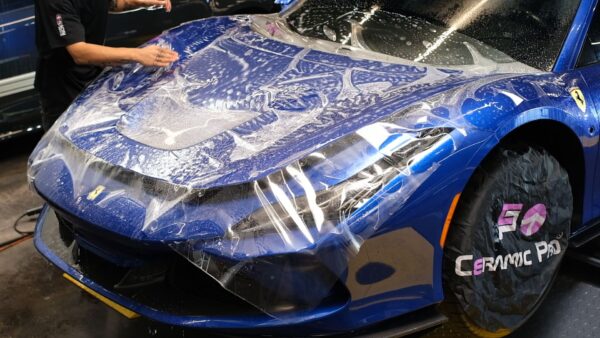
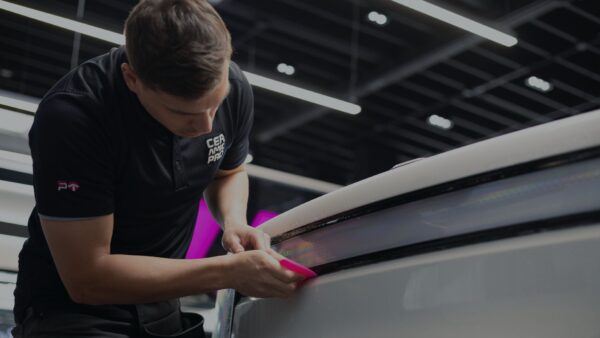
Professional PPF installation on a Tesla typically takes anywhere from a few hours (single panels like a bumper) to a full day or more for full-body coverage, depending on scope. The process starts with a wash and decontamination, then panel-specific film templates are cut (or pre-cut kits are used, depending on the installer and coverage level), the film is applied with a slip solution and squeegeed to remove air and moisture, and edges are wrapped or trimmed depending on the panel.
Ask any installer you’re considering whether they’re using pre-cut patterns for your specific Tesla model and trim year, a pattern cut for a pre-refresh Model 3 or Model Y won’t fit the current Highland/Juniper body lines correctly.
Given the paint-quality issues described above, a paint correction pass before PPF installation is worth strong consideration on a Tesla, not just a nice-to-have. Installing film over unaddressed swirl marks locks those imperfections in for the life of the film. See our full breakdown: Do I Need Paint Correction Before Installing a PPF on My Tesla?
| Ceramic coating | PPF | |
|---|---|---|
| Protects against | UV fading, chemical etching, light contamination, oxidation | Rock chips, road debris, physical abrasion |
| Adds gloss/hydrophobic effect | Yes | Some (more with a coating on top) |
| Stops chipping | No | Yes |
| Typical lifespan | 2–5 years depending on tier | 5–10+ years (Ceramic Pro PPF carries up to a 12-year warranty) |
| Self-heals light marks | No | Yes (heat-activated) |
They’re not competing products, they solve different problems, and most owners get the most value from both. Ceramic Pro PPF, for example, is a ceramic-coated film with nanoceramic technology built into both the top layer and the adhesive, combining physical impact resistance with the gloss and hydrophobic benefits of a coating in one product. This is the combination behind Ceramic Pro’s popular Ultimate Armor package for Tesla models — full-front PPF topped with Ceramic Pro 9H and Top Coat, paired with ceramic coating on the rest of the vehicle. For full protection, apply PPF to impact-prone areas (front end, or full body for maximum coverage) and ceramic coating across the remaining painted surfaces, wheels, calipers, and glass. See our guide to caring for a ceramic-coated Tesla for aftercare once it’s installed.

Model 3 / Model Y: The most common Tesla PPF jobs. Relatively simple panel geometry makes installation faster and more affordable than the S or X. The current “Highland” (Model 3) and “Juniper” (Model Y) refresh models have revised bumper and light designs, confirm with your installer that film patterns are cut for the current body style, not a pre-refresh template.
Model S / Model X: More complex curves (particularly around the falcon-wing doors on the X) mean more panel-by-panel template work and typically a higher labor cost.
Cybertruck: A genuinely different case, its body panels are bare stainless steel, not painted metal. PPF here is generally about preventing fine scratches and maintaining the brushed/finished look rather than protecting a paint layer, and not every installer or film product is set up for it.